Last updated November 25, 2026
How to Hire an ADU Contractor in Elk Grove: A Step-by-Step Guide
Any licensed general contractor in California can legally build your ADU. That’s the part most homeowners miss. The contractor with the polished truck and the impressive website may be perfectly competent at kitchen remodels and second-story additions and still be a poor choice for an accessory dwelling unit, because ADUs are a strange, rule-heavy, detail-sensitive slice of construction that rewards repetition. The builders who do them constantly know which plan details trigger comments from the city, which design moves save weeks on the approval side, and which “minor” deviations turn a clean permit into a three-round correction cycle. This guide gives you the exact questions to ask, the contract language to scrutinize, and the verification steps to run before a single dollar of deposit leaves your account, all written from the perspective of a team that builds ADUs in Elk Grove and nothing else.
Quick Answer
To hire an ADU contractor in Elk Grove, verify the contractor’s CSLB license and insurance first, then ask for their ADU-specific project history, first-submission permit approval rate, and who owns the design and inspection schedule. Choose a contractor who handles design, permitting, and construction under one roof, and insist on a fixed-price contract with a fully itemized scope. The strongest single signal is depth of ADU volume, not the size or marketing polish of the firm.
Table of Contents
- Why an ADU Specialist Beats a Good General Contractor
- The Questions to Ask Before You Sign Anything
- Design-Build vs. Design-Bid-Build for ADUs
- How to Verify License, Insurance, and Subcontractors
- Reading an ADU Contract: Red Flags and What Allowances Hide
- Matching the Right ADU Format to Your Lot and Goals
- What’s Specific to Building an ADU in Elk Grove
- Who Manages the Schedule and Inspections
Why an ADU Specialist Beats a Good General Contractor
A general contractor who “does ADUs” and an ADU specialist can look nearly identical on paper. Both hold the same license class. Both have photos of finished projects. The difference lives in volume, repetition, and where the contractor’s attention goes between jobs. An ADU specialist runs the same type of project back to back, so the permit strategy, the design constraints, and the inspection sequence are second nature rather than something relearned with each job. A generalist treats your ADU like a small custom home, which means they’re applying residential remodeling instincts to a project type with its own rules.
Here’s what that gap looks like in practice. ADU plans live or die on details that a generalist rarely thinks about: how the unit is sited relative to the primary house, how utility connections are routed, how the design accounts for the city’s specific review comments. A builder who has done this many times knows which plan details are likely to draw corrections and designs around them before submission. A builder doing their second or third ADU learns those lessons on your dime and your calendar.
We build one thing: ADUs and the accessory structures that go with them. That focus shapes every vendor relationship and every process step we’ve refined. If you want to understand the broader landscape of who builds what in this market, our overview of ADU builders is a useful starting point, but the hiring decision comes down to a handful of verifiable facts. You’re looking for evidence of repeatable ADU delivery, not a promise that your project will be treated specially.
What “Does ADUs” Actually Means
Ask a contractor how many ADUs they’ve completed. Then ask how many were in Elk Grove specifically. Then ask for two references from those local projects. A specialist answers without hesitation. A generalist often pivots to describing their overall build count, which tells you the ADU was a side project, not the main event.
The Questions to Ask Before You Sign Anything
These five questions separate the specialists from the generalists faster than any website or brochure. Ask them on the first call, before anyone visits your property. A confident, specific answer is the signal you want. Vague answers or deflections are your cue to keep interviewing.
- How many ADU projects have you completed in Elk Grove specifically? Local volume matters because city review habits, common plan comments, and even the practicalities of getting inspections scheduled are things a builder only learns by doing local work repeatedly.
- What is your first-submission permit approval rate? A builder who tracks this knows their own performance. Someone who has never measured it is telling you they don’t review their own results.
- Is design done in-house or subcontracted? In-house design keeps the people drawing the plans in the same room as the people building them, which matters when a design decision affects cost or constructability.
- Who manages the inspection schedule? The answer should be a role inside the company, not “the city calls you.” Inspection coordination is project management, and it needs an owner.
- Can I see the scope breakdown before I sign? A contractor confident in their numbers will hand you a detailed line-item scope without resistance.
When we sit down with a homeowner in Elk Grove, these are the same questions we expect to be asked. Answering them clearly is part of the job. For a closer look at how the design and permitting side works, our ADU Builder Elk Grove page walks through the phases from first sketch to final inspection.
Design-Build vs. Design-Bid-Build for ADUs
On a normal home remodel, hiring an architect and then bidding the construction to a separate builder is a reasonable model. On an ADU, it’s a coordination risk you don’t need. Here’s why: for an ADU, the design and the permit strategy are inseparable. A design decision that looks cost-neutral on paper can change how the city reviews the plan, what corrections come back, and how long approval takes. When the architect and the builder are separate companies, that conversation happens across an organizational boundary, and details get lost.
Design-build means one company owns the design, the permitting, and the construction. You get a single point of accountability from the first sketch through the final inspection. If something in the plan turns out to be a problem during construction, the same team that drew it solves it, and nobody spends a week arguing about whose fault it is. From design to permit to move-in, handled by one team.
The design-bid-build route can work, and some homeowners prefer to work with an architect they already know. If you go that route, build a clear handoff into the contract and make sure the builder is involved in the design reviews that affect permit outcome. Also expect to manage the coordination yourself, because someone has to.
Which Model Fits Most Homeowners
For most Elk Grove homeowners adding an ADU, design-build is the lower-friction choice. The project is complex enough that reducing handoffs reduces risk. If you’re comparing builders, ask each one which model they run and why. The answer tells you how they think about accountability.
How to Verify License, Insurance, and Subcontractors
Verification is the step homeowners skip when they’re excited about a design. Don’t skip it. Every fact below is checkable, and every check is fast. Run them before any deposit changes hands, and run them again on the subcontractors a builder plans to bring to your property.
- CSLB license status: Look the contractor up on the California State License Board website. Confirm the license is active, the name matches the contract, and the license class covers the work. If a company presents a name that doesn’t match the license record, ask why before you go further.
- Workers’ compensation coverage: Ask for a certificate of insurance showing workers’ comp. If a contractor claims to have no employees, that’s a different conversation, but any company sending people onto your property should show proof of coverage.
- General liability insurance: Request the certificate and confirm it’s current. This is the coverage that protects you if something goes wrong on site.
- Subcontractor insurance and licenses: Every specialty trade on your project should be independently licensed where required and carry their own coverage. Ask the builder for a list of the subs they plan to use and be ready to spot-check them the same way you checked the builder.
- Written contract: It should carry the license number, the scope, the price, the schedule terms, and a payment schedule. If any of those are missing, don’t sign.
This list takes an afternoon to run. It’s the cheapest insurance you’ll ever buy on a project this size. The local pro you ultimately hire should be licensed and insured as the state requires, and should have no hesitation handing you the paperwork.
Reading an ADU Contract: Red Flags and What Allowances Hide
A fixed-price contract sounds like a safety net. If the scope behind that price is vague, it isn’t. A fixed price on an undefined scope just moves the argument to later, when the ambiguity gets resolved with a change order. The most important question you can ask about an ADU contract is not “what’s the total?” but “what exactly is in that total, and what happens if reality differs from the assumptions?”
Allowances are the single biggest source of cost surprise in ADU contracts. An allowance is a placeholder number for a category of work that gets trued up later against actual cost. That’s fine when the allowance is realistic and clearly labeled. It becomes a liability when the allowance is set low to keep the headline price down, which means the number you signed against was never the number you’d pay. Ask each contractor to show you the allowances broken out by category and how they arrived at each figure.
Watch for these red flags in the contract itself:
- A fixed price with no itemized scope attached. Fixed price on undefined scope is a dispute in waiting.
- Allowance language that doesn’t specify what happens when the allowance is exceeded, or who pays the overrun.
- Change-order rates that aren’t defined up front. You want the rates for added work written into the contract, not negotiated after the fact.
- Vague language about who pulls the permits and who pays permit fees. Both should be explicit.
- No written schedule or milestone list. Without milestones, there’s nothing to measure progress against.
- Payment schedules that front-load the deposit or bill heavy early. Payments should track completed work, not anticipated work.
We put written line-item quotes in front of homeowners before any commitment, and we don’t use vague allowances to hide the real number. If the total moves, you’ll know why before you sign.
Matching the Right ADU Format to Your Lot and Goals
Before you hire anyone, you need clarity on what you’re actually building. The format choice affects cost, permit path, and how the finished unit gets used. There’s no universal right answer; the right answer depends on your lot, your budget, and whether the unit is for family, long-term rental income, or long-horizon property value.
Detached ADU
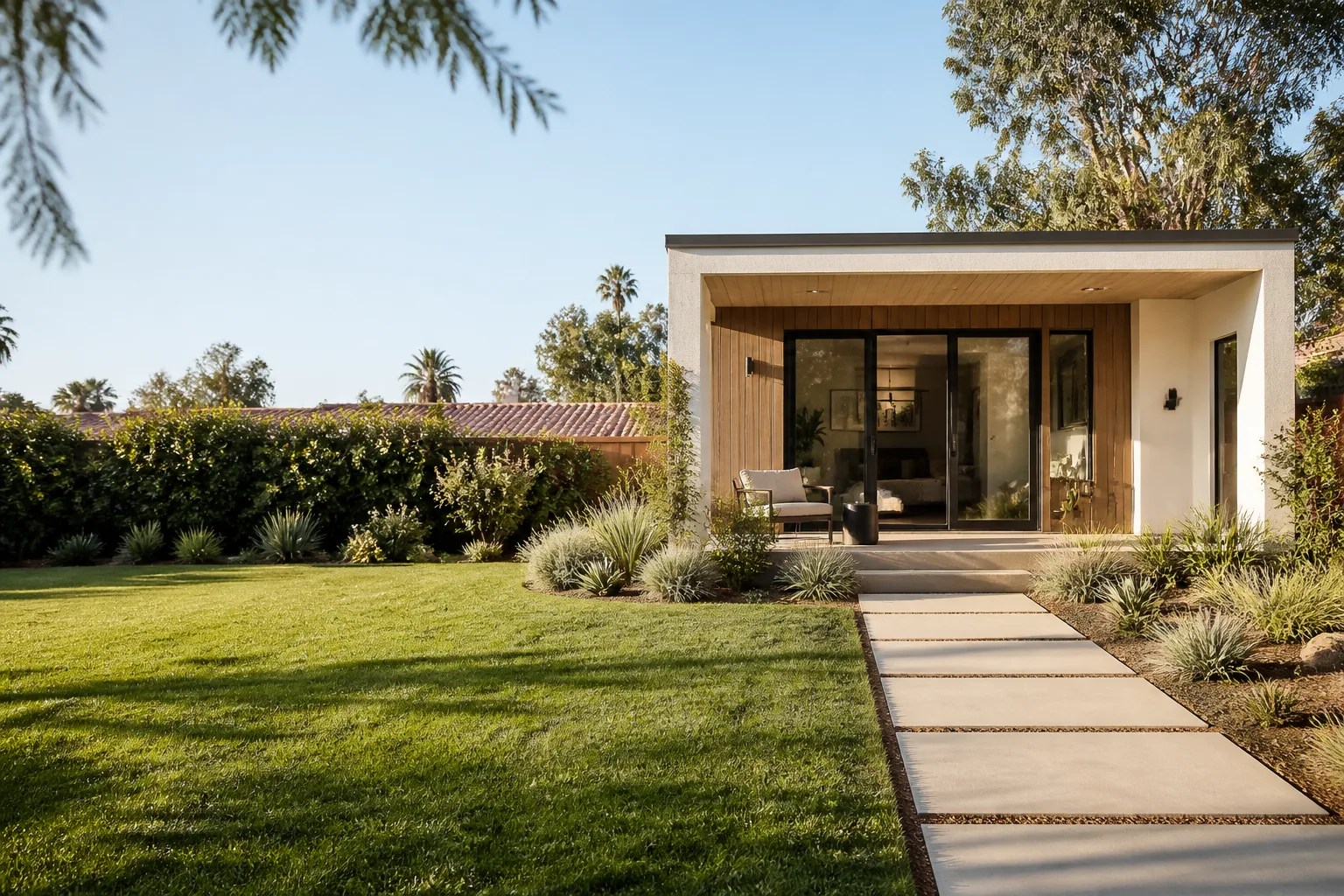
A standalone structure on your property. It offers the most design freedom and the most privacy for whoever lives there, and it’s the format most homeowners picture when they think ADU. It also requires available space on the lot, so site assessment comes early.
Garage Conversion
Your garage is an untapped ADU. Converting an existing structure usually shortens the path from plan to move-in and can make the budget go further than new construction. If you’re weighing the trade-offs, our overview of garage conversion covers what changes when you keep the existing shell.
Junior ADU (JADU)
A smaller unit that lives inside the primary home’s footprint. It’s often the leanest path to an extra living space, and it fits properties that don’t have room for a detached structure. A junior ADU has its own set of design considerations, and we walk through them in detail.
Home Addition
Not every homeowner wants a separate structure. Sometimes expanding the existing home is the better fit for how the family uses the house. We build additions that serve ADU goals without a detached footprint.
Prefab: Abodu, Cover, Dvele, and Custom
If you’re leaning toward prefab, you have factory-engineered options that most contractors can’t offer. We’re authorized to build and deliver units from Abodu, Cover, and Dvele, three of the most recognized names in the prefab ADU market, and we also construct fully custom ADUs when a stock design won’t fit the lot or the goals. Choose from prefab or fully custom, because we build both.
What’s Specific to Building an ADU in Elk Grove
Elk Grove’s climate is a factor homeowners don’t always consider at the hiring stage but should. Summers run hot and dry, which affects everything from how you think about shading to how the design handles cooling loads. Winters are mild, which simplifies the building envelope but still matters for siting and orientation. A builder who has built in Elk Grove knows how these factors shape a good ADU design, and knows how to steer plan details toward what the city’s planning and building departments are looking for.
The ADU rules themselves vary by lot and city, and they are not something to take on faith from a contractor’s word or a blog post. Setbacks, height, size, utility connections, and review processes all depend on the specifics of your property. We confirm current requirements with the city’s planning or building department before plans are final, and you should expect any contractor you hire to do the same rather than assuming yesterday’s rules still apply.
Elk Grove has grown into a genuinely desirable place to own property, and that shows up in what homeowners ask for. Families want multigenerational living space that keeps grandparents close without sharing a wall. Long-term owners see an ADU as a way to build real, durable value into the lot. Rental income is also part of the conversation, and while rental rules depend on the city, checking with the city before you build for that purpose is the right first step.
Starting Checklist for Elk Grove Homeowners
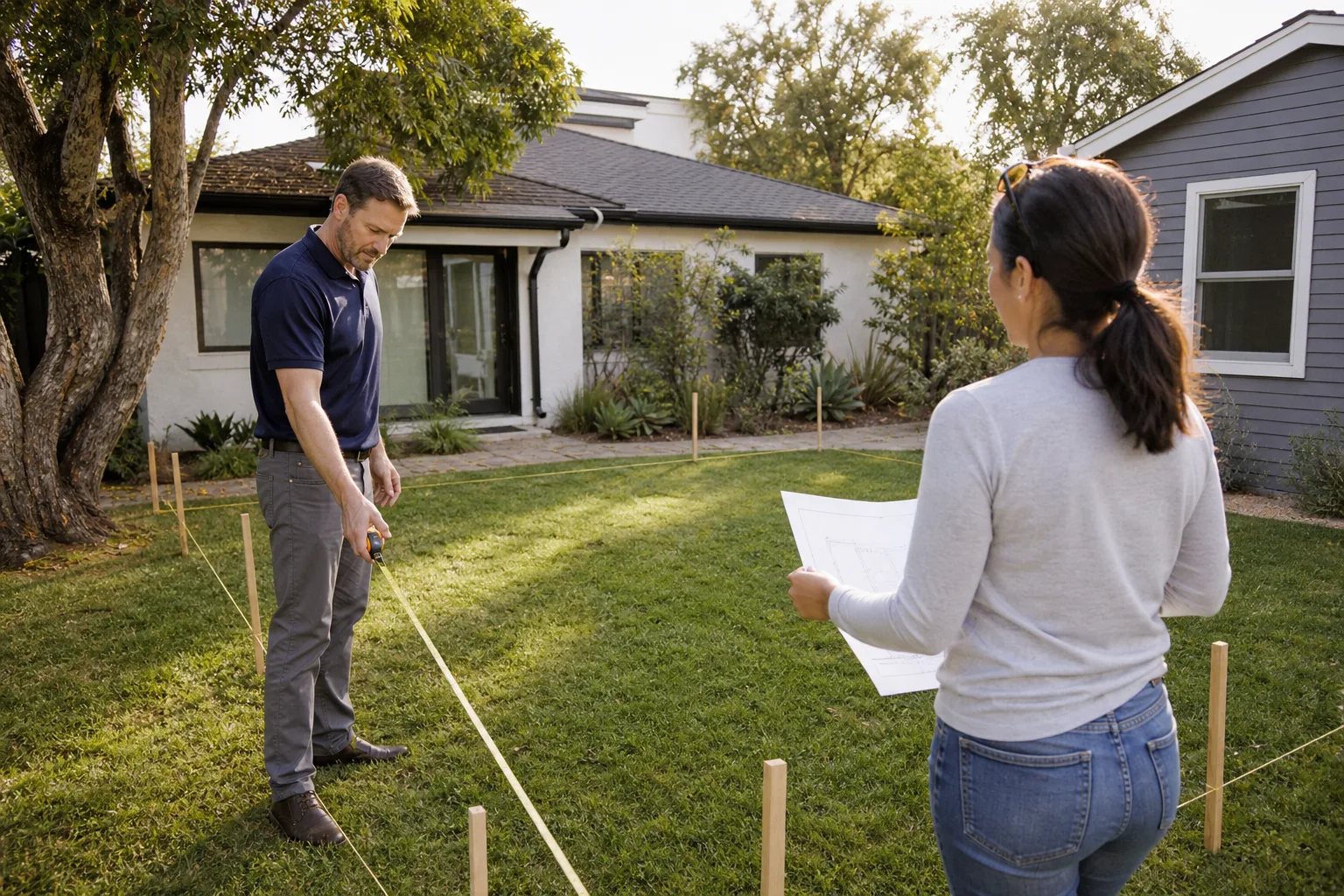
- Confirm your lot’s basic constraints before chasing any design. Size, access, and utility tie-in are the gating items.
- Decide the primary purpose: family use, long-term income, or property value. It shapes the format.
- Interview at least three contractors, and score each one on the five questions above.
- Ask each one to confirm current ADU rules with the city before plans are final, and to put that step in writing.
- Choose your format, then choose your builder. Not the other way around.
Who Manages the Schedule and Inspections
One person inside the company should own the schedule. Not “the team” in the abstract, but a role with a name who is accountable for moving the project from design review to permit to foundation to framing to final inspection. Ask who that person is before you sign. If the answer is fuzzy, the schedule will be fuzzy too.
Inspection management is the part of ADU project management most homeowners underestimate. Each phase of construction has inspection gates, and missing a gate can stall the job while the next phase waits. A dedicated ADU builder keeps the inspection calendar on their own radar and coordinates it into the construction sequence, rather than waiting for the city to remind anyone. The written estimate you sign should set the schedule terms, including how milestones are tracked and what happens if they slip.
Design and permitting expertise, in-house, means we understand the approval process from the inside rather than treating it as an afterthought. Our technicians have up to 11 years of experience with the details of ADU delivery, and that experience mostly shows up in the parts of the project homeowners never see directly: the plan details that avoid corrections, the inspection gates that stay on schedule, the coordination between trades that happens before the first crew arrives.
Common Mistakes to Avoid
- Hiring on price alone. The cheapest ADU quote often turns out to be the one with the thinnest scope and the biggest change orders. Compare scopes, not totals.
- Signing a fixed-price contract with no itemized scope. The fixed price is a promise on paper only. Insist on a line-item scope before signing.
- Separating design and construction without a plan for coordination. On an ADU, the design and permit strategy are inseparable. If you split them, budget the time to manage the handoff yourself.
- Not verifying CSLB license status and insurance. It takes minutes and can prevent a project-level disaster. Verify before any deposit changes hands.
- Ignoring allowance language. An allowance set low to keep the headline price down will true up later, and you’ll pay the difference. Ask for the allowance breakdown.
- Choosing a contractor with one or two ADUs under their belt. Generalists treat the ADU like a small custom home and miss the details a specialist handles automatically.
- Not confirming current ADU rules with the city. Rules vary by lot, and the city’s planning or building department is the authority. Make sure your contractor confirms them in writing before plans are final.
When to Call a Professional
Call a professional when you’re ready to move from “we’re thinking about an ADU” to “we need to know what this actually looks like on our lot.” That conversation involves siting, format options, permit path, and real numbers, and it’s hard to have any of it in the abstract. Call when you’ve been told a garage can’t be converted and want a specialist’s assessment. Call when your lot has unusual constraints and a generalist told you it wasn’t feasible. Call when you’ve gotten one quote and want a second, framed against the five questions above. Call when you’re comparing a prefab unit from Abodu, Cover, or Dvele against a custom build and want a clear-eyed comparison of the trade-offs. ADU Builder Elk Grove offers free estimates in Elk Grove. Call (279) 800-3682 to schedule yours.
Frequently Asked Questions
The wrong ADU contractor doesn’t always cost more in dollars up front; the real cost shows up in permit corrections, change orders, and schedule delays that a more experienced specialist would have avoided. Design and permit errors tend to surface late, which is why the questions you ask before signing matter more than the headline price. Call (279) 800-3682 for a free estimate so you can compare a specialist’s itemized scope against the alternative.
A fixed-price contract is only safer when the scope behind the price is detailed and complete; on a vague scope, a fixed price just moves the dispute to later. Cost-plus can be the more honest structure when the scope genuinely can’t be pinned down yet, provided the markup is disclosed. The deciding factor is the itemized scope, not the pricing model. Call (279) 800-3682 to see how we structure an ADU estimate.
You don’t need a separate architect if you choose a design-build contractor that handles design, permits, and construction in-house. On an ADU, design and permit strategy are inseparable, so keeping them under one roof reduces coordination risk. If you use a separate architect, plan for a clear handoff and a builder who participates in the design reviews. Call (279) 800-3682 to talk through the design-build option.
Look the contractor up on the California State License Board website, confirm the license is active, and verify the name and license class match the contract. Also request certificates for general liability and workers’ comp, and spot-check the subcontractors the contractor plans to use. It takes minutes and prevents the most common hiring mistake. Call (279) 800-3682 to request our documents before you sign anything.
A junior ADU is a smaller unit inside the primary home’s footprint, while a full ADU is a separate unit that’s typically detached or converted from a separate structure; which fits your lot depends on space, budget, and how you plan to use the unit. The choice affects both the permit path and the design, so it’s worth pinning down early. Call (279) 800-3682 for a free estimate that compares the formats on your specific lot.
Yes; prefab ADUs from recognized brands like Abodu, Cover, and Dvele offer factory-engineered, design-forward units, and custom builds remain an option when a stock design won’t fit the lot. We’re authorized to build and deliver units from those brands and we build custom ADUs as well, so the comparison comes down to your goals and your site. Call (279) 800-3682 to talk through both paths.
The Bottom Line
The right Elk Grove ADU contractor is the one who can prove they’ve done ADU work at volume, locally, with a first-submission permit record they track. Verify their CSLB license and insurance before you sign, insist on a fixed price backed by an itemized scope, ask exactly what their allowances assume, and confirm who owns the inspection schedule. Favor a design-build team over a split design-and-build arrangement, because on an ADU the design and permit strategy can’t be separated cleanly. Choose a specialist over a generalist whenever the track record supports it. When you’re ready to talk through your project, call (279) 800-3682. We answer 24/7. Fast dispatch from 7am to 7pm, Sunday through Friday. Estimates are free, and the written quote sets the final price.
Written by the team at ADU Builder Elk Grove.